⌂
Worn underlayment
Older underlayment dries out and cracks with age, especially under strong sun. This is the most common cause of leaks on older tile roofs.
Concrete and clay tile roofs can last for decades, but there is something most homeowners do not know about them: the tiles are not the main waterproof layer. The underlayment beneath the tiles does most of that job. When a tile roof leaks, the problem is usually underneath.
That is why tile roof leaks need a careful repair, not just a new tile. Call (801) 426-8831.
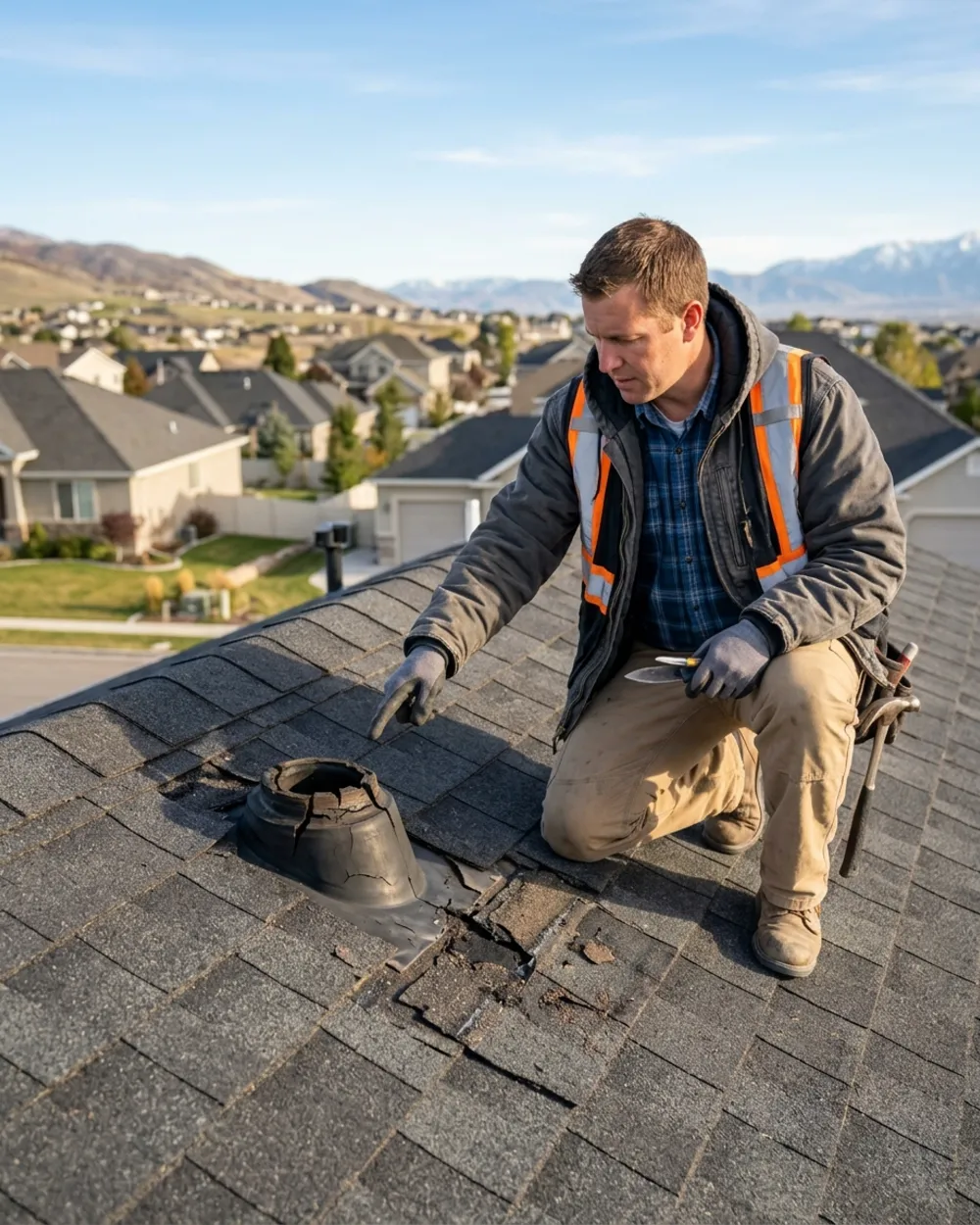
Tiles shed most of the rain and snow and protect the layer below from sun. Some water always gets past the tiles, especially in wind driven rain and melting snow. The underlayment catches that water and carries it down and off the roof.
As long as the underlayment is in good shape, a cracked tile alone may not leak right away. Once the underlayment wears out or gets damaged, even small gaps let water into the home.
Older underlayment dries out and cracks with age, especially under strong sun. This is the most common cause of leaks on older tile roofs.
Hail, falling branches and people walking on the roof can crack tiles. Broken pieces expose the underlayment to sun and let more water through.
Tiles that shift out of place leave gaps. Freeze and thaw cycles and loose fasteners can cause this.
Valleys, walls, chimneys and skylights on tile roofs need flashing shaped to the tile profile. Rusted or poorly fitted flashing leaks.
Ridge tiles held with mortar can crack loose over time, opening the top of the roof to water.
Leaves and dirt caught under tiles and in valleys hold water against the underlayment.
Snow trapped between tile ridges can melt and refreeze, pushing water sideways under tiles.
Tiles break easily when stepped on wrong. We walk only where tiles are supported to avoid creating new damage.
We check from the attic and lift tiles around the suspect area to see the underlayment and flashing below.
Tiles are lifted and set aside so they can be reused where possible.
Damaged or worn underlayment is replaced, lapped correctly into the surrounding layers.
Valley, wall and penetration flashing is repaired or replaced as needed.
Good tiles go back in place. Broken tiles are replaced with the closest match available.
Loose ridge tiles are reset and resealed.
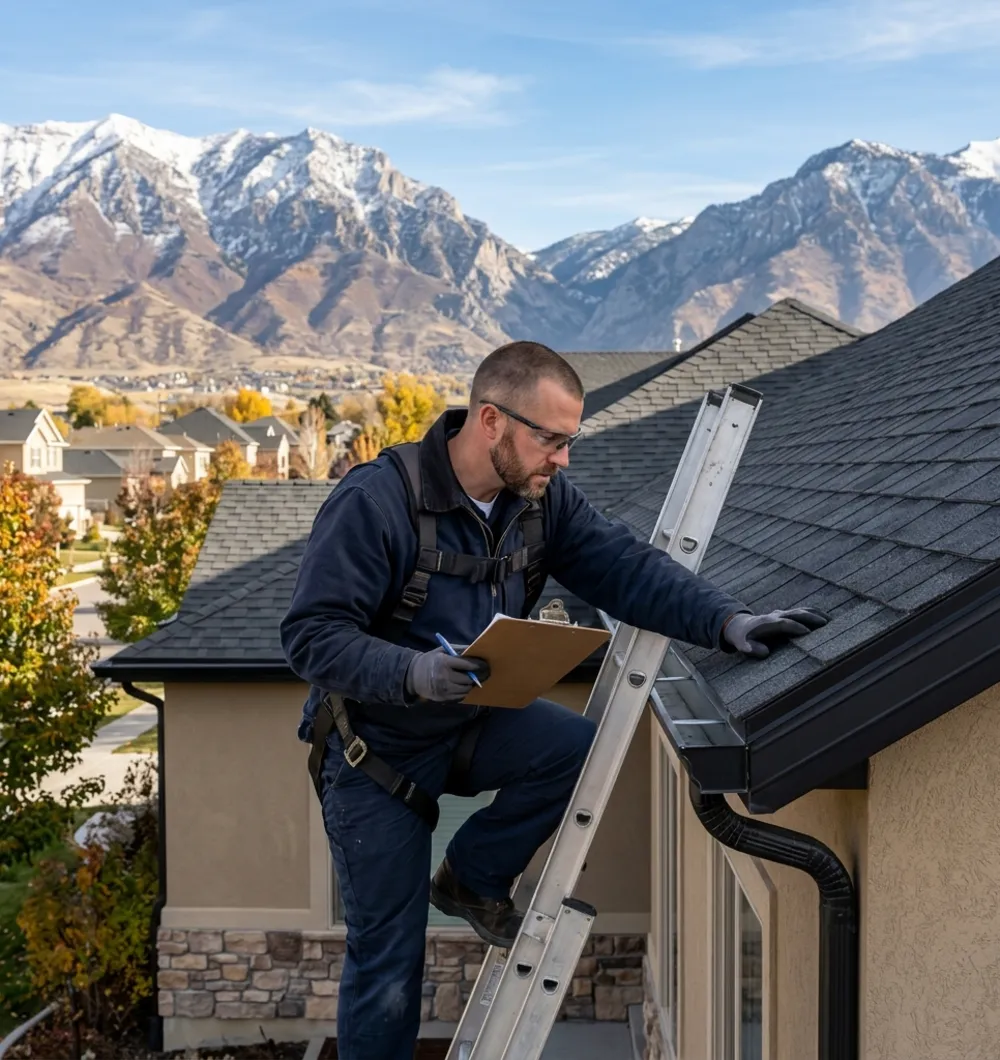
Tiles break easily when stepped on wrong. We walk only where tiles are supported to avoid creating new damage.
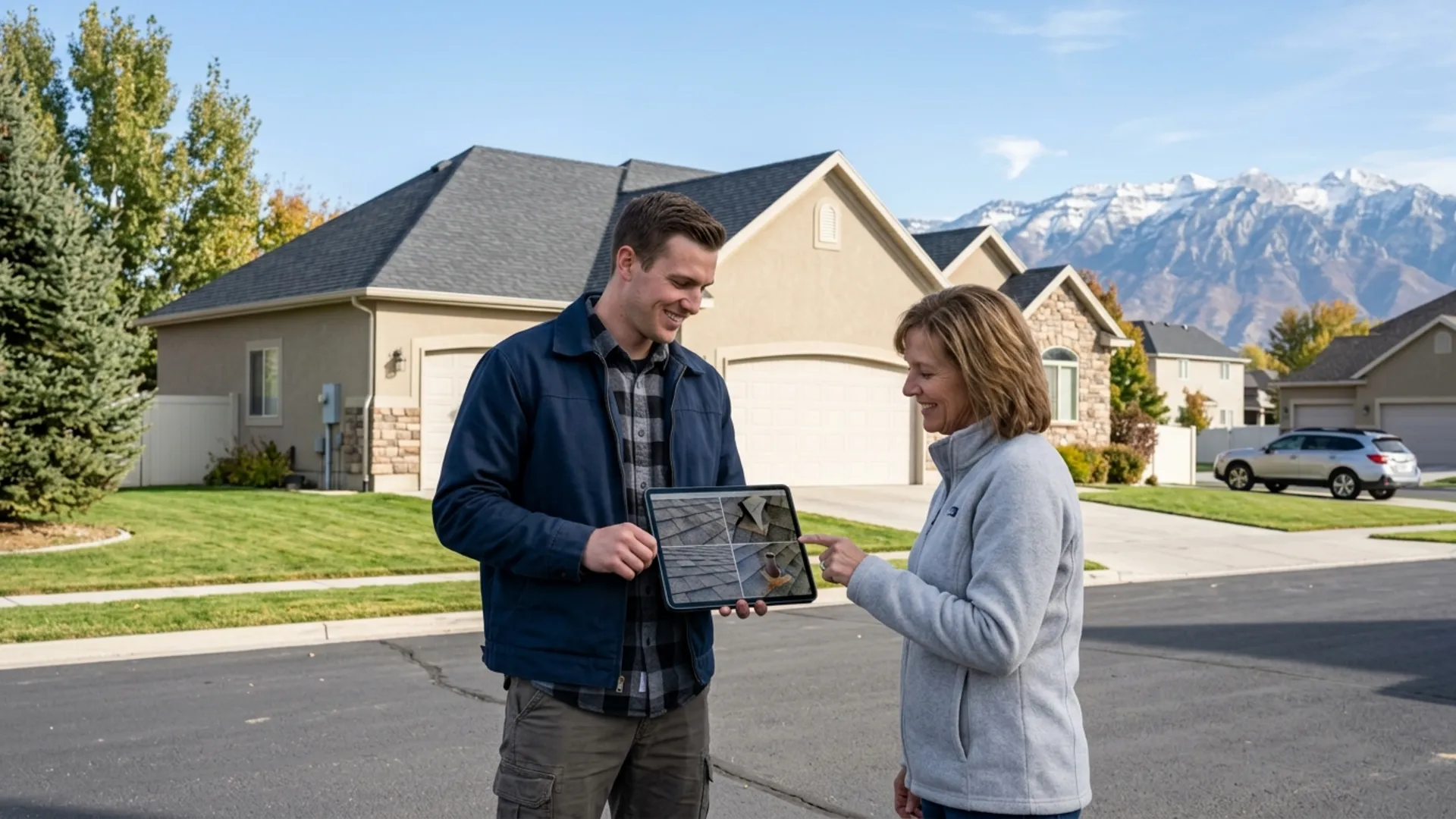
Some tile styles and colors are no longer made. We look for close matches from current lines and salvage sources. When an exact match is not possible, using matching tiles from a less visible part of the roof is one option we can talk through.
Call (801) 426-8831 →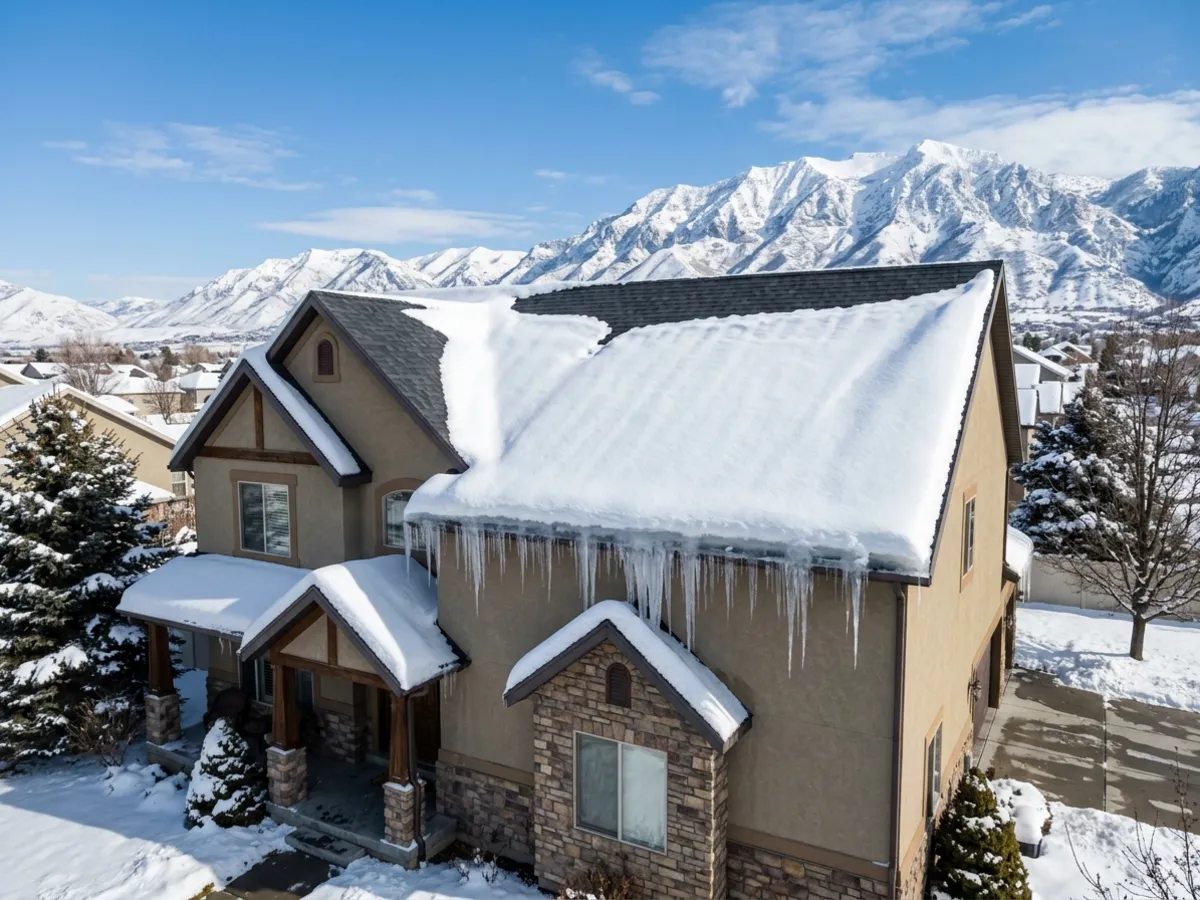
If the underlayment has failed across most of the roof, spot repairs will keep chasing new leaks. In that case, an underlayment replacement, where tiles are removed, new underlayment is installed and the same tiles are put back, may be the better long term fix. We will explain the choices.
Call (801) 426-8831 →Still have a question? Call and ask. We will give you a straight answer.
(801) 426-8831 →Because the underlayment under the tiles is likely worn or damaged. The tiles can look perfect while the layer below has cracked from age.
We do not recommend it. Walking on a tile roof without knowing where to step usually breaks more tiles, and a slip can be dangerous.
Not right away. But a cracked tile lets more water and sun reach the underlayment, which speeds up its wear. It is best to replace it soon.
Yes. Large hail can crack concrete and clay tiles. After a hailstorm, it is worth having the roof checked. See storm and hail damage repair.
Yes. We repair both types on any building in Spanish Fork.
The fastest way to reach us is by phone. There are no forms to fill out and no waiting for a callback email. Just call and talk to someone about your roof.