⌂
Wind lifted shingles
Each shingle is held down by nails and a strip of sealant that bonds it to the one below. Strong gusts, like the ones coming out of Spanish Fork Canyon, can break that bond. Once a shingle lifts, rain blows right under it.
Asphalt shingles cover most homes in Spanish Fork, from older ranch homes near Main Street to the newest builds in Legacy Farms and Quiet Valley. They hold up well, but wind, sun, snow and age all find ways to break them down.
When shingles start letting water in, we find the failed spot and repair it with matching shingles so the fix lasts and blends in. Call (801) 426-8831.
Each shingle is held down by nails and a strip of sealant that bonds it to the one below. Strong gusts, like the ones coming out of Spanish Fork Canyon, can break that bond. Once a shingle lifts, rain blows right under it.
A shingle that lifts enough times eventually tears off. Missing shingles leave the underlayment exposed to sun and water.
Years of strong UV and big temperature swings make shingles brittle. Cracks open up, especially on south and west facing slopes.
As decking expands and shrinks with the seasons, nails can back out and push up through the shingle above. Each popped nail is a hole for water. This is common on newer homes in the first few years.
The colored granules protect the asphalt from sun. When they wash off, shingles age fast. Piles of granules at the downspouts are a sign.
Nails driven too high, too low or at an angle during install can leave openings for water.
Roof cement smeared over a problem may seal for a season, then crack and trap water underneath.
We check the attic and the roof to locate where water is entering. See roof leak detection.
We break the seal on surrounding shingles without tearing them, so we can slide new ones in.
If the felt or synthetic underlayment is torn or the wood is soft, we repair that before closing it up.
We match brand, style and color as closely as possible.
New shingles are nailed in the right spot and sealed to the shingles around them so wind cannot lift them.
If we see popped nails or loose shingles around the repair, we take care of them while we are up there.
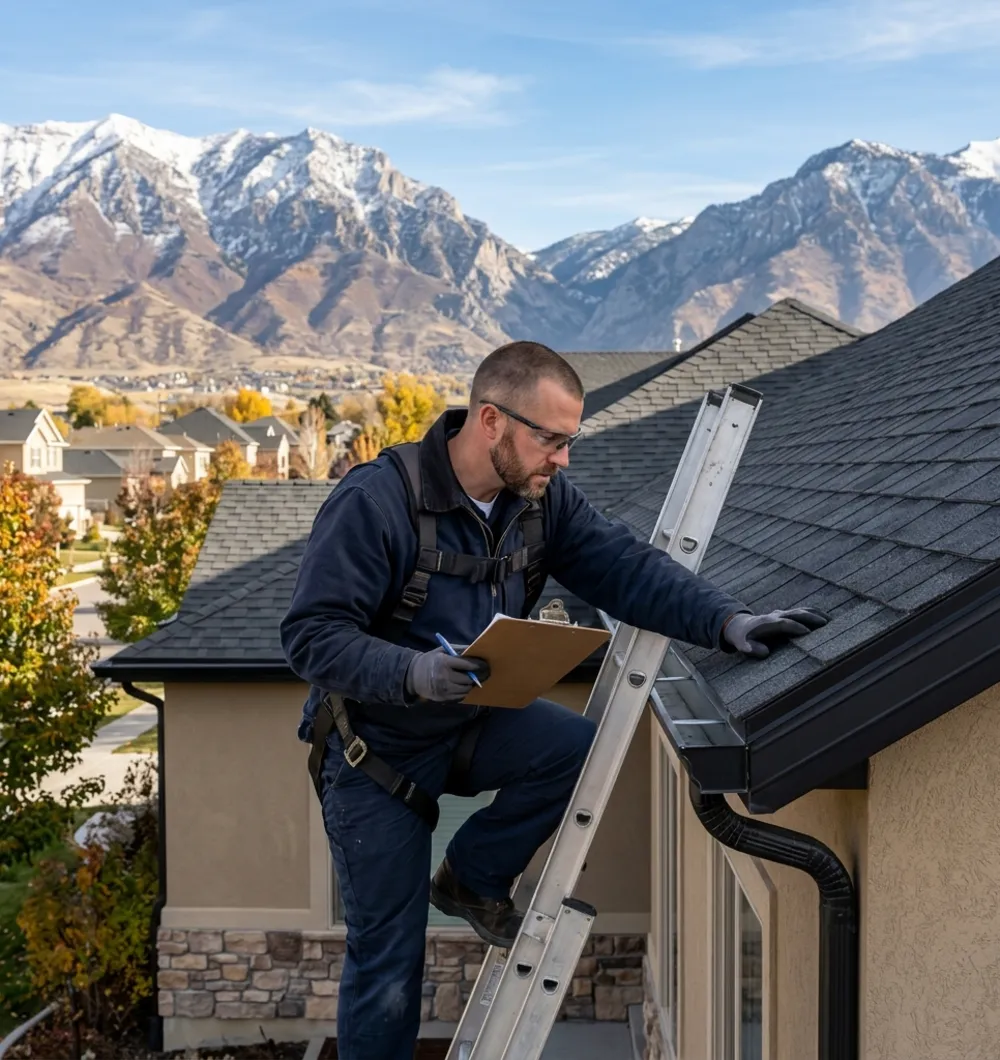
We check the attic and the roof to locate where water is entering. See roof leak detection.
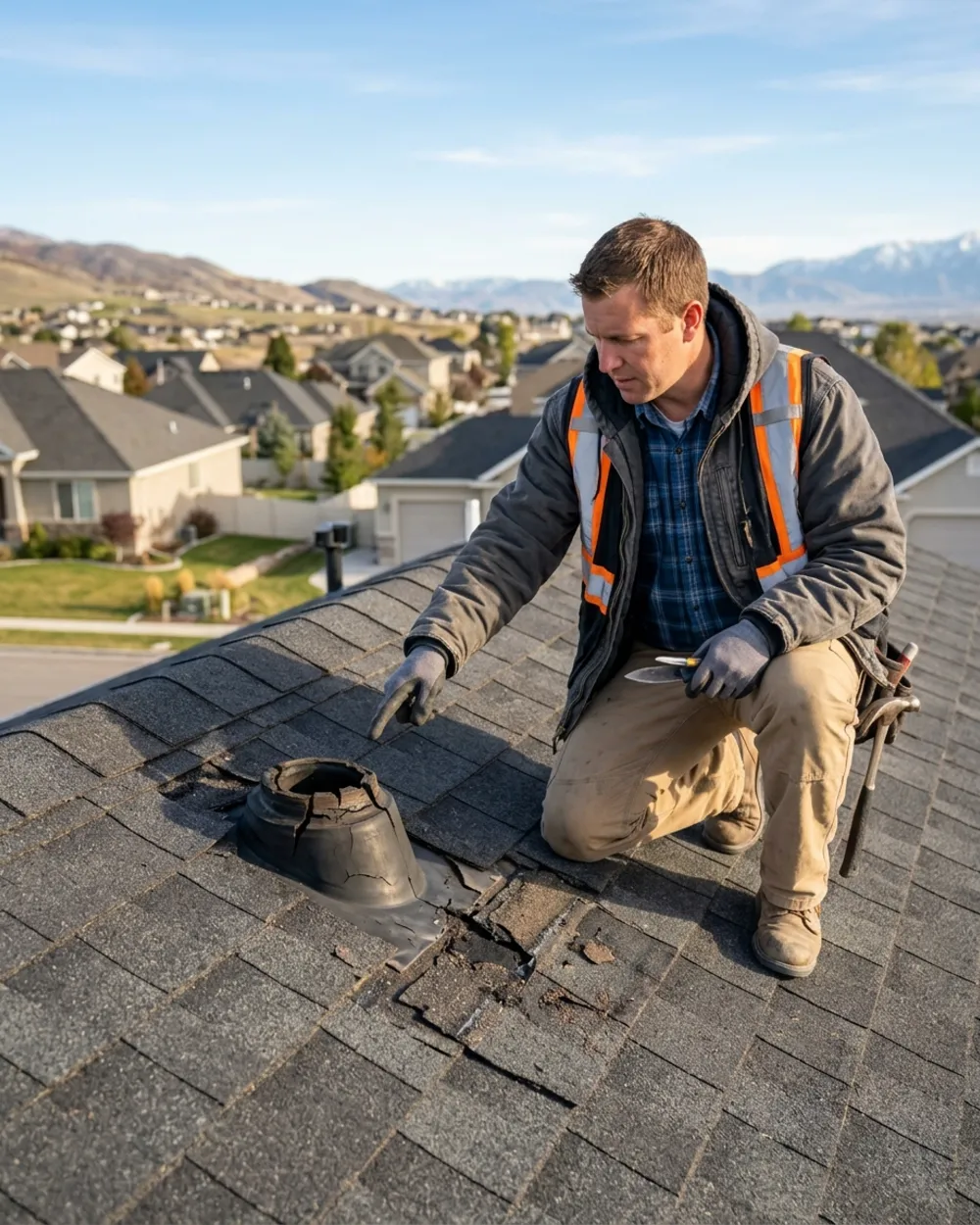
Shingle colors fade over time, and some styles get discontinued. We do our best to find the closest match. On older roofs, a repair may look slightly different at first, but most blend in as the new shingles weather.
Repairs make sense when the damage is limited to one area. Replacement starts to make sense when:
We will give you a straight answer on which side your roof is on.
Ask a pro →Still have a question? Call and ask. We will give you a straight answer.
(801) 426-8831 →Yes. Replacing a handful of damaged shingles is one of the most common repairs we do. There is no need to replace a whole slope for a small problem.
Wood decking moves as it dries and goes through hot summers and cold winters. That movement can push nails up, especially in the first few years after a home is built.
Wind and hail damage are often covered by homeowners insurance. We document what we find with photos. Learn more about storm and hail damage repair.
Yes, on dry days. Shingle sealant bonds best in warm weather, so in winter we hand seal new shingles to make sure they stay down until summer heat finishes the bond.
From the ground, look for shingles that look raised, wavy or out of line with the ones around them. After a windstorm, check the yard for loose shingle pieces.
The fastest way to reach us is by phone. There are no forms to fill out and no waiting for a callback email. Just call and talk to someone about your roof.