⌂
Wind driven leaks
Wind driven leaks only happen when rain blows sideways into a flashing gap or under a lifted shingle.
You have a stain on the ceiling, but the roof above it looks fine. Maybe the leak only shows up during heavy rain, or only when snow melts, or only when the wind blows from one direction. These are the leaks that get patched in the wrong spot again and again.
We specialize in finding them. Call (801) 426-8831 to have your leak traced to the real source.
Water rarely drips straight down. It gets in at one point, then runs along the underside of the decking, follows a rafter or rides along a pipe before it finally drops onto your ceiling. The stain you see can be several feet away from where water actually enters.
Some leaks also depend on conditions:
Wind driven leaks only happen when rain blows sideways into a flashing gap or under a lifted shingle.
Snowmelt leaks appear when meltwater backs up behind ice or sits against a chimney for days.
Heavy rain leaks happen when a valley or gutter overflows and water reaches spots that normally stay dry.
Condensation in a cold attic can drip and look exactly like a leak, even with a perfect roof.
Where is the stain? When did it first appear? Does it grow during rain, snowmelt or wind? The pattern tells us a lot before we even climb a ladder.
From inside, we look for water trails, dark or soft decking, wet insulation, rusted nails and light coming through. Following the stains uphill usually points toward the entry point.
We check every likely spot above the area: flashing at walls and chimneys, pipe boots, vents, skylights, valleys, nail pops, lifted shingles and worn sealant.
For stubborn leaks, we run water over one section of the roof at a time, starting low and moving up, while someone watches inside. When the drip shows up, we know which section is at fault.
Moisture meters and, where it makes sense, thermal imaging can show wet areas in decking and insulation that are not visible to the eye.
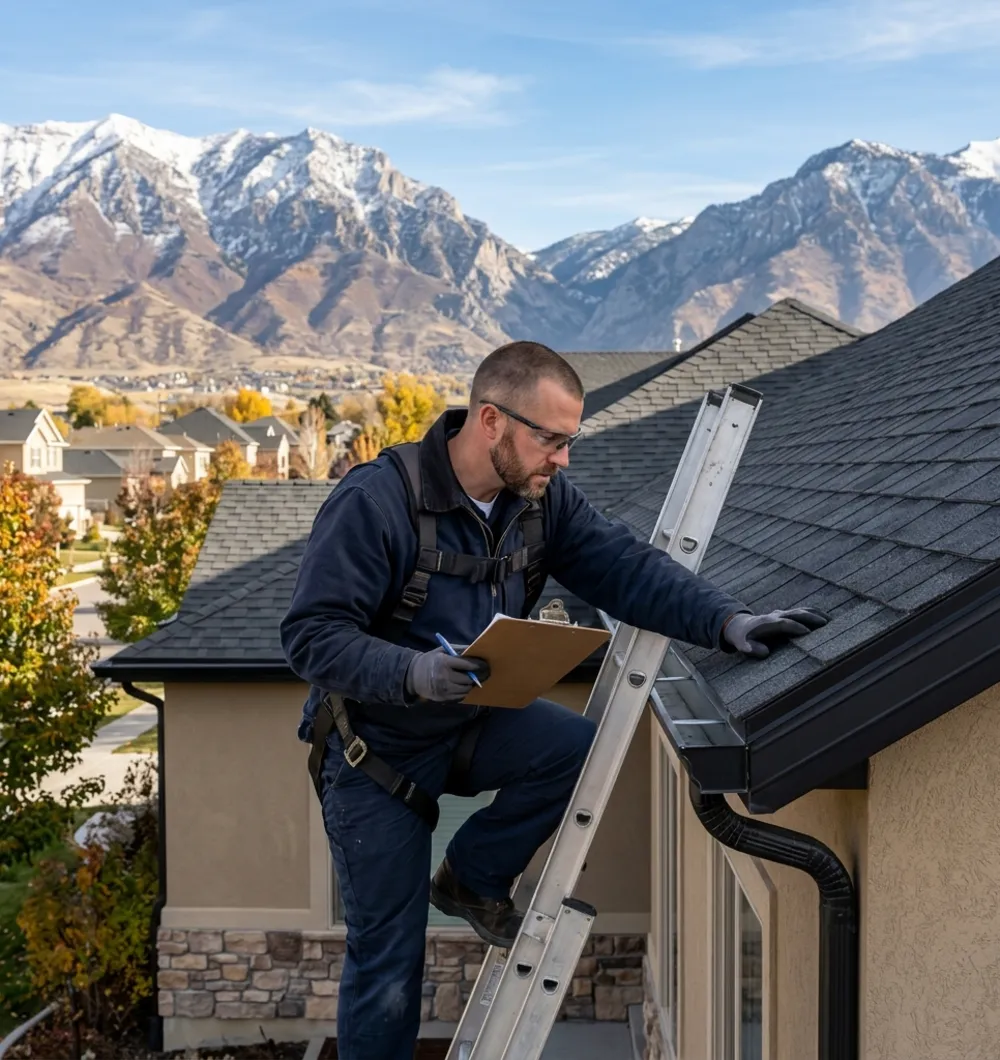
Where is the stain? When did it first appear? Does it grow during rain, snowmelt or wind? The pattern tells us a lot before we even climb a ladder.
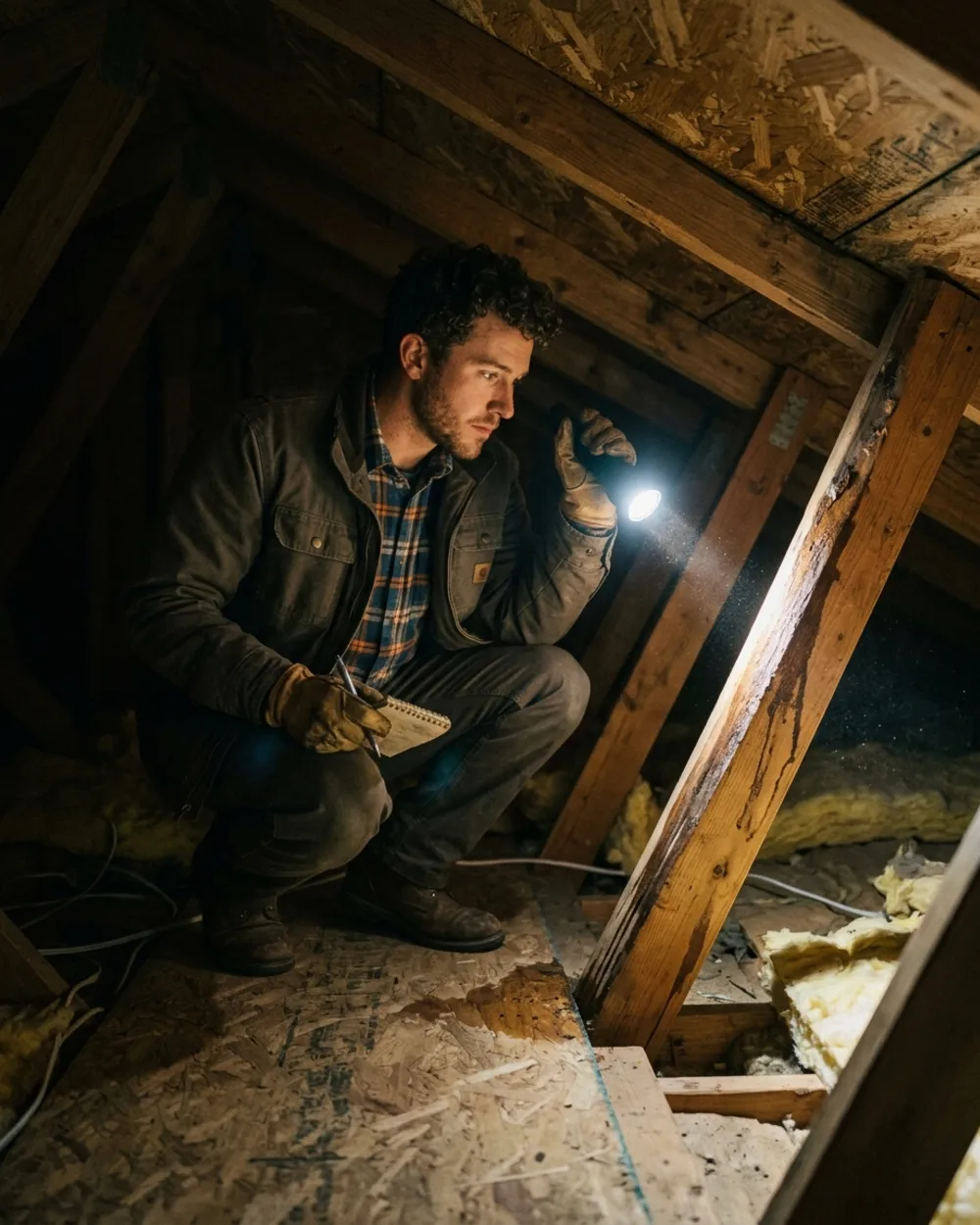
Spanish Fork winters are cold, and warm, moist air from bathrooms, kitchens and laundry can rise into the attic. When it hits the cold underside of the roof, it turns to frost. On a warm afternoon that frost melts and drips, leaving stains that look just like a leak.
The fix for condensation is usually better attic ventilation and sealing air leaks from the house, not roof repair. We will tell you which one you have so you do not pay for the wrong fix.
Call (801) 426-8831 →Still have a question? Call and ask. We will give you a straight answer.
(801) 426-8831 →Many leaks need a certain mix of conditions, like rain blowing from one direction or melting snow sitting against one spot. That is exactly why we ask when it happens. The timing points to the cause.
Usually, yes. Water leaves trails, stains and soft spots in the attic, and damaged parts are visible on the roof. For hidden leaks, controlled water testing recreates the conditions.
The patch was probably in the wrong place, or it covered a symptom instead of the cause. Tracing the full water path is how we avoid repeat repairs.
Yes. Most leaks can be repaired on the same visit once you approve the plan, unless special materials or dry weather are needed.
It can be. A stain under a bathroom or near a water heater flue might be plumbing. If we find no roof cause, we will tell you so you can call the right trade.
The fastest way to reach us is by phone. There are no forms to fill out and no waiting for a callback email. Just call and talk to someone about your roof.