⌂
Open valleys
A strip of metal runs down the center of the valley, with shingles cut back on each side. Water runs on the exposed metal.
A roof valley is the V shaped channel where two slopes meet. It works like a gutter on top of your roof, collecting water from both sides and carrying it down. That means valleys handle more water than any other part of the roof, and when they wear out or get blocked, they leak.
Homes with lots of gables, dormers and angles, which includes many newer houses around Spanish Fork, have several valleys each. Call (801) 426-8831 if you suspect a valley leak.
A strip of metal runs down the center of the valley, with shingles cut back on each side. Water runs on the exposed metal.
Shingles from one side run across the valley, and shingles from the other side are cut in a straight line along the center. This is very common on modern homes.
Shingles from both sides overlap in an alternating pattern across the valley.
Each type has its own weak spots, and we repair all three.
Leaves, pine needles and dirt collect in valleys and act like a dam. Water backs up and gets under the shingles. Homes near mature trees see this the most.
Because so much water runs through valleys, shingles there wear out faster than the rest of the roof.
On closed cut valleys, shingles trimmed in the wrong place leave gaps or let water run under the cut edge.
Nails placed in the middle of a valley create holes right where water flows heaviest.
Valleys should have a special waterproof layer beneath the shingles. When it is missing or damaged, any small gap becomes a leak.
Snow from two slopes piles up in valleys and melts slowly. In Spanish Fork winters, ice often forms in the lower valley and pushes water sideways under the shingles.
On older open valleys, the metal can rust through over time.
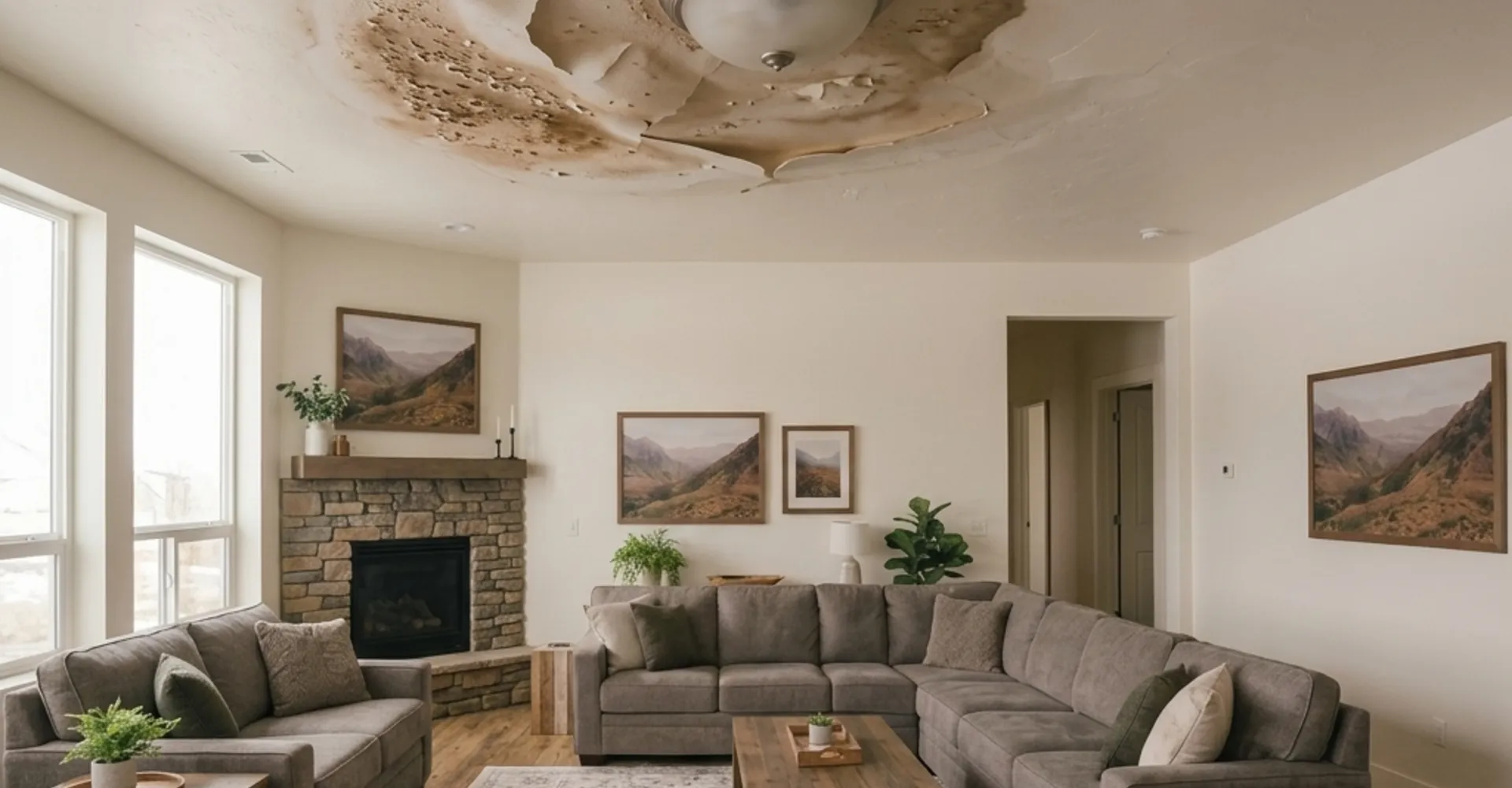
01Stains on the ceiling or upper wall below where two roof sections meet
02Water in the attic along the valley rafter
03Shingles in the valley that look worn, curled or bare
04Debris piled up in valleys that you can see from the ground
05Ice buildup in the valley during winter
We remove debris so we can see the shingles and metal clearly.
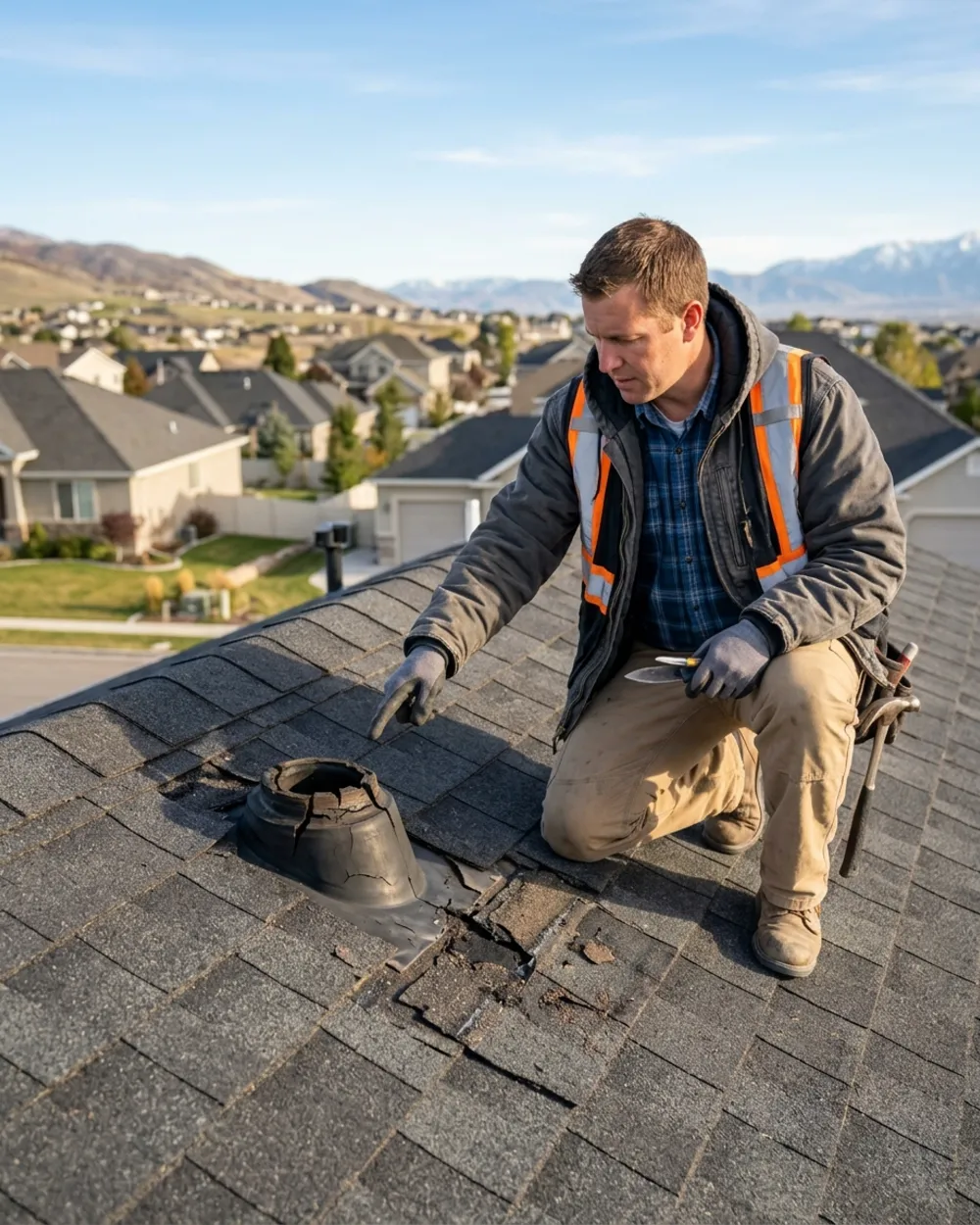
We check for gaps, exposed nails, worn shingles and damaged underlayment.
Shingles are removed along the affected length, and the underlayment is replaced with a waterproof valley liner.
Shingles or valley metal are installed with nails kept away from the center and cuts made correctly.
Cut edges on closed valleys are sealed so water cannot slip underneath.
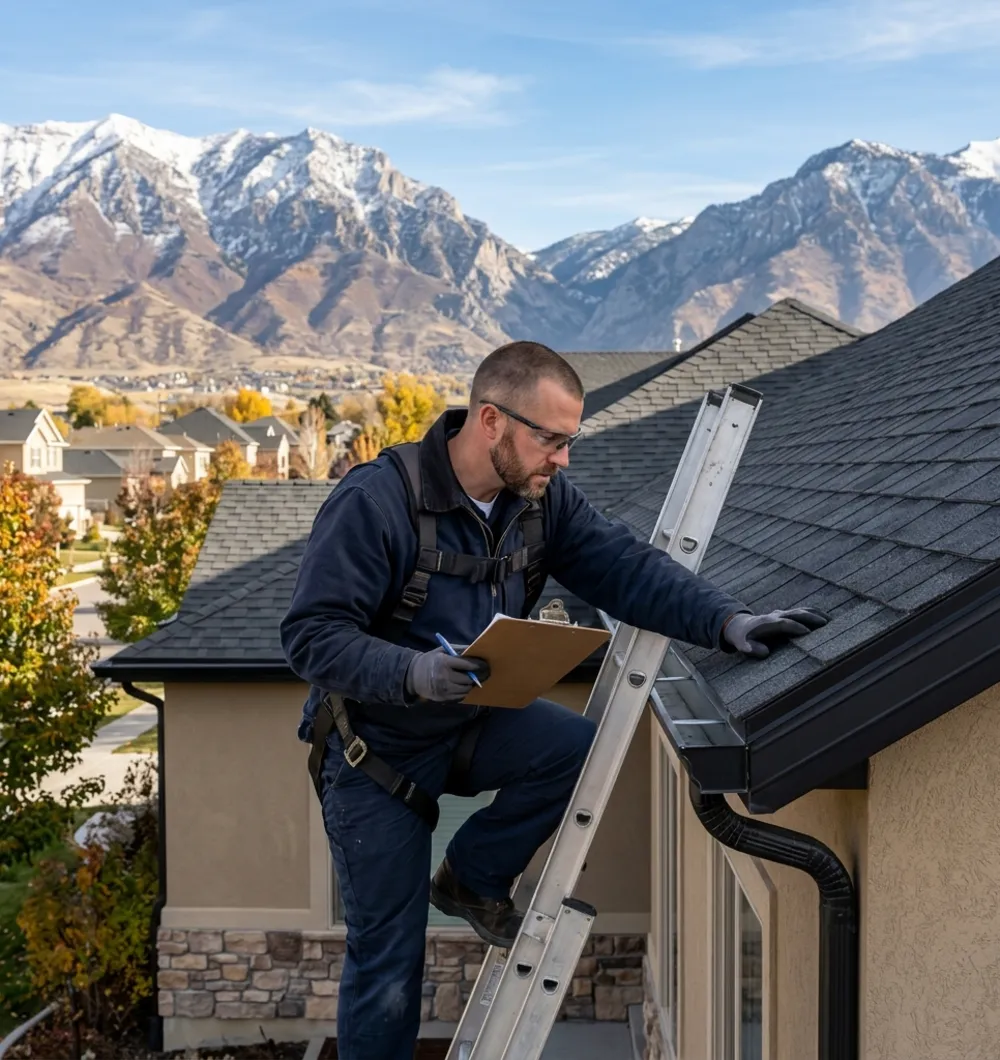
We remove debris so we can see the shingles and metal clearly.
Still have a question? Call and ask. We will give you a straight answer.
(801) 426-8831 →They carry water from two slopes at once, so the shingles there handle much more water and debris than anywhere else.
Yes. We can rebuild just the valley, which is one of the most common partial repairs we do.
Both work well when installed correctly. Open metal valleys tend to shed debris and ice a bit better, while closed cut valleys look cleaner. We usually match what your roof already has.
Snow and ice collect in valleys and melt slowly, pushing water sideways under shingles. This is common during Spanish Fork winters. See also ice dam roof leak repair.
If you can see leaves or needles piled in a valley from the ground, it is a likely factor. We clear it and check for damage underneath.
The fastest way to reach us is by phone. There are no forms to fill out and no waiting for a callback email. Just call and talk to someone about your roof.