⌂
TPO
A white or light gray single ply membrane with heat welded seams. Common on newer buildings.
Flat roofs are never perfectly flat. They have a gentle slope that is supposed to move water to a drain or edge. When that slope, the membrane or the seams fail, water sits, finds a weak spot and comes inside.
You will find flat and low slope roofs all over Spanish Fork on porch covers, garages, room additions, modern style homes, townhome buildings and shop buildings. We repair them all. Call (801) 426-8831.
A white or light gray single ply membrane with heat welded seams. Common on newer buildings.
A black rubber membrane, usually glued or taped at the seams. Common on older additions and porch roofs.
Asphalt based rolls applied with heat or adhesive, often with a granule surface.
Built up roofing made from layers of asphalt and felt, usually finished with gravel.
A lighter asphalt roll often used on low slope porch and shed roofs.
Spots where water sits for more than a day or two after rain speed up wear and eventually leak. Sagging decking or clogged drains are common causes.
Seams are the weakest part of most flat roofs. Glued EPDM seams can let go with age, and poorly welded TPO seams can split.
Where a flat roof meets a wall, parapet or the main roof, the flashing has to turn up and stay sealed. Cracks and pulled back flashing here are very common leak points.
Leaves, dirt and ice can block drains, so water backs up past the membrane. Seals around drains also wear out.
Dropped tools, foot traffic, hail and tree branches can pierce membranes.
On modified bitumen and BUR roofs, trapped moisture and sun exposure cause blisters and cracking.
Snow sits longer on flat roofs than on sloped ones. As it melts, water can pool behind ice and work into seams.
Water travels under flat roof membranes, so the leak inside may be far from the hole. We inspect the surface closely and check seams, edges and drains.
Wet insulation under the membrane needs to come out, or it keeps causing problems.
We patch TPO with TPO, EPDM with EPDM and so on. Mixing incompatible materials leads to early failure.
Failed seams are cleaned and rewelded or retaped. Wall flashing is rebuilt or resealed.
We clear clogs and reseal drain and scupper connections.
Where low spots are causing repeat leaks, we talk through options like adding tapered material or an extra drain.
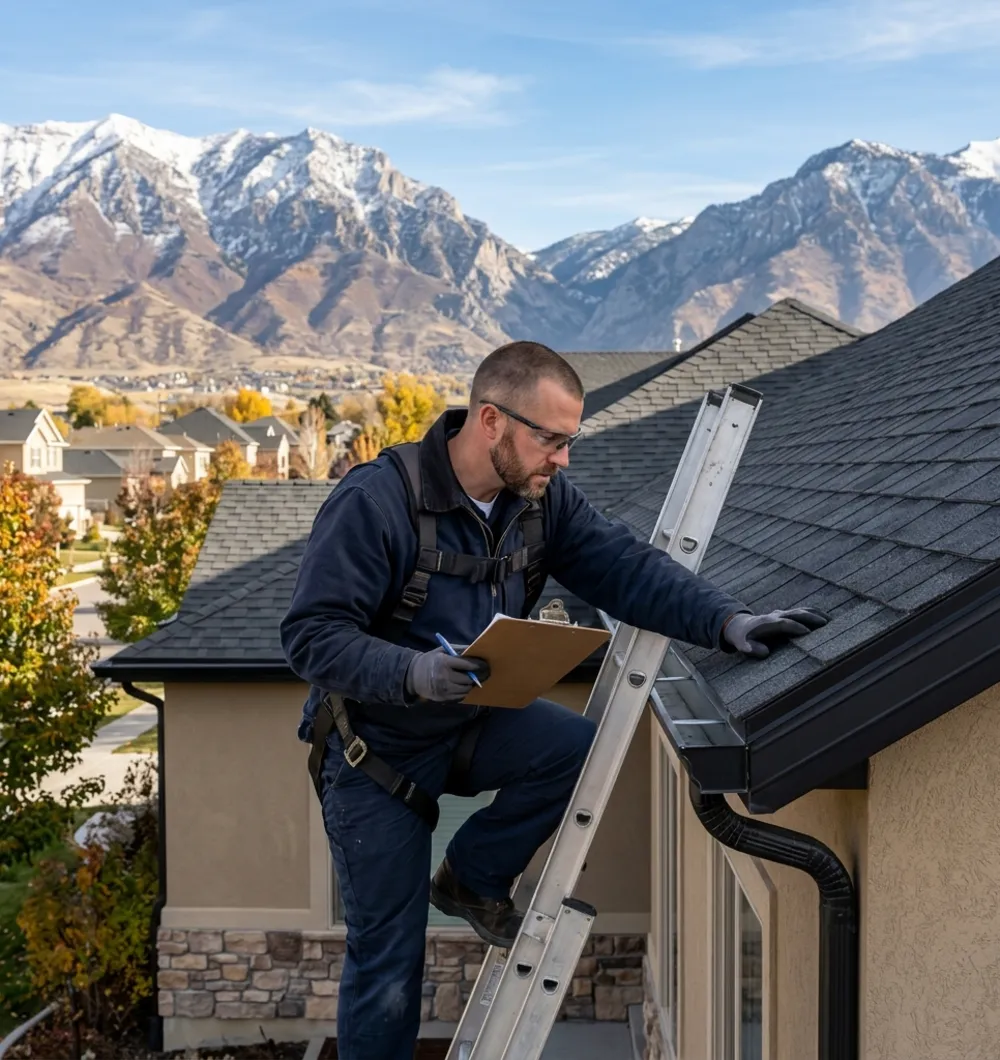
Water travels under flat roof membranes, so the leak inside may be far from the hole. We inspect the surface closely and check seams, edges and drains.
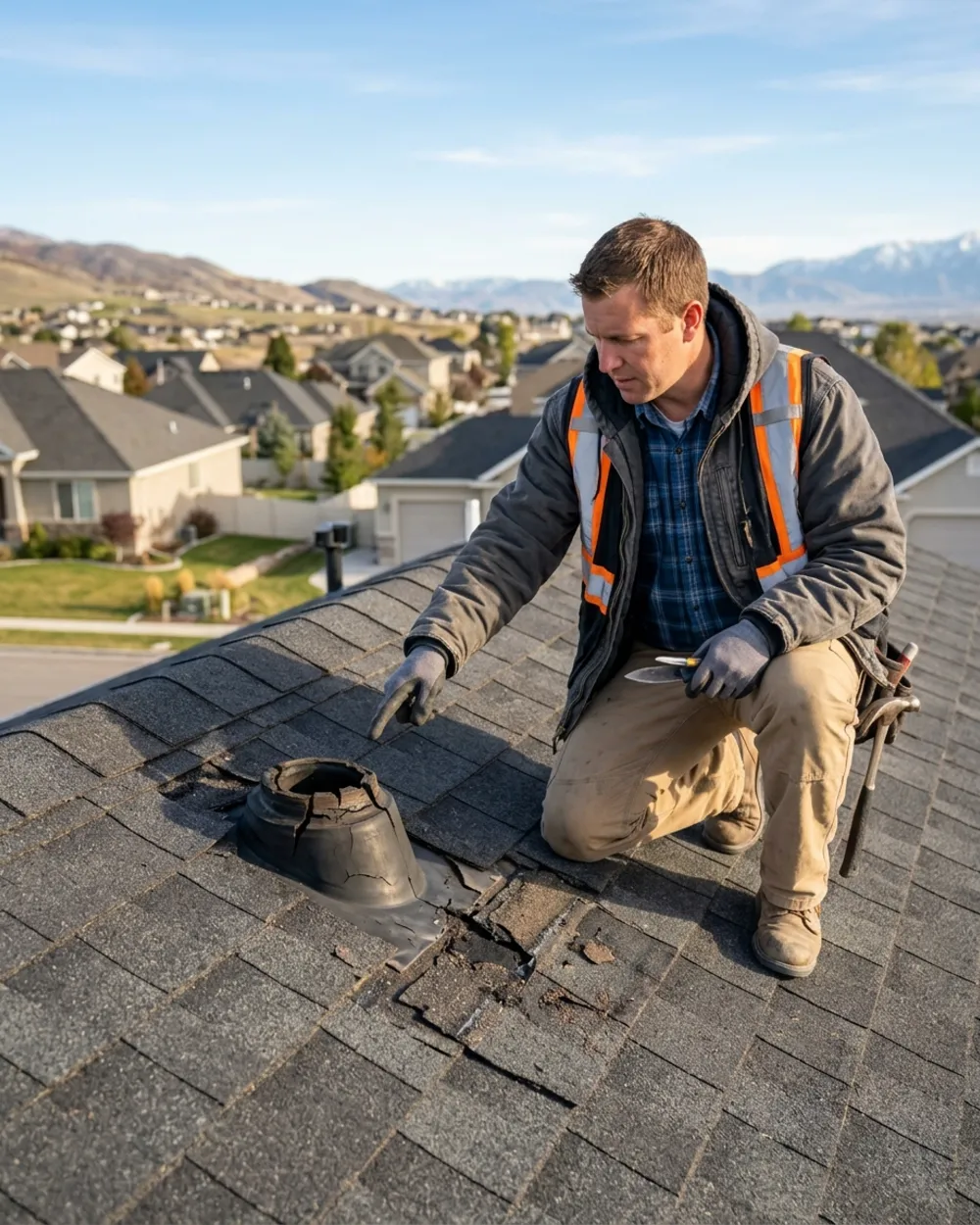
Many flat roof leaks can be fixed with patches and seam work. If the membrane is worn out across the roof or the insulation underneath is soaked over a wide area, a larger section or full recover may be the better choice. We will tell you plainly what we see.
Still have a question? Call and ask. We will give you a straight answer.
(801) 426-8831 →Porch and patio roofs often have very low slope and older roll roofing or EPDM. The joint where the porch roof meets the house wall is the most common leak spot.
Small amounts that dry within a day or two after rain are usually fine. Water that sits for days means a drainage problem that will shorten the life of the roof.
It depends on the material. Some adhesives and sealants need warmer temperatures to bond. We can often make temporary repairs in cold weather and finish the permanent work when conditions allow.
A proper patch using the same material as the roof, installed on a clean, dry surface, can last as long as the rest of the roof. A quick tar patch usually does not.
Yes. We repair flat roofs on any building in Spanish Fork.
The fastest way to reach us is by phone. There are no forms to fill out and no waiting for a callback email. Just call and talk to someone about your roof.