⌂
Step flashing
Small L shaped pieces woven in with each row of shingles where a sloped roof runs up against a wall. If even one piece is missing or bent, water can get into the wall.
Shingles and tiles handle the open parts of a roof well. The trouble starts where the roof changes direction or meets something else, like a wall, a dormer, a chimney or the roof edge. Those joints are sealed with metal flashing, and when it fails, water goes straight into the wall or ceiling.
Flashing problems are one of the most common causes of leaks we find in Spanish Fork. Call (801) 426-8831.
Flashing is thin metal bent to fit where two surfaces meet. It sends water away from the joint and back onto the roof surface. Good flashing is layered with the shingles so water always flows over it, never behind it.
Small L shaped pieces woven in with each row of shingles where a sloped roof runs up against a wall. If even one piece is missing or bent, water can get into the wall.
A small angled piece at the bottom of a roof to wall joint that kicks water out into the gutter instead of down the wall. It is often missing or too small, especially on newer homes. Without it, water runs behind the siding and rots the wall.
Used where the top of a roof section meets a wall, such as above a porch roof or a lower roof under a second story.
A second layer of metal set into a wall or chimney that covers the top edge of step flashing.
Metal along the eaves and rakes that guides water into the gutter and protects the edge of the decking.
Metal lining in some roof valleys. See roof valley leak repair.
We cover chimney and skylight flashing on their own pages: chimney leak repair and skylight leak repair.
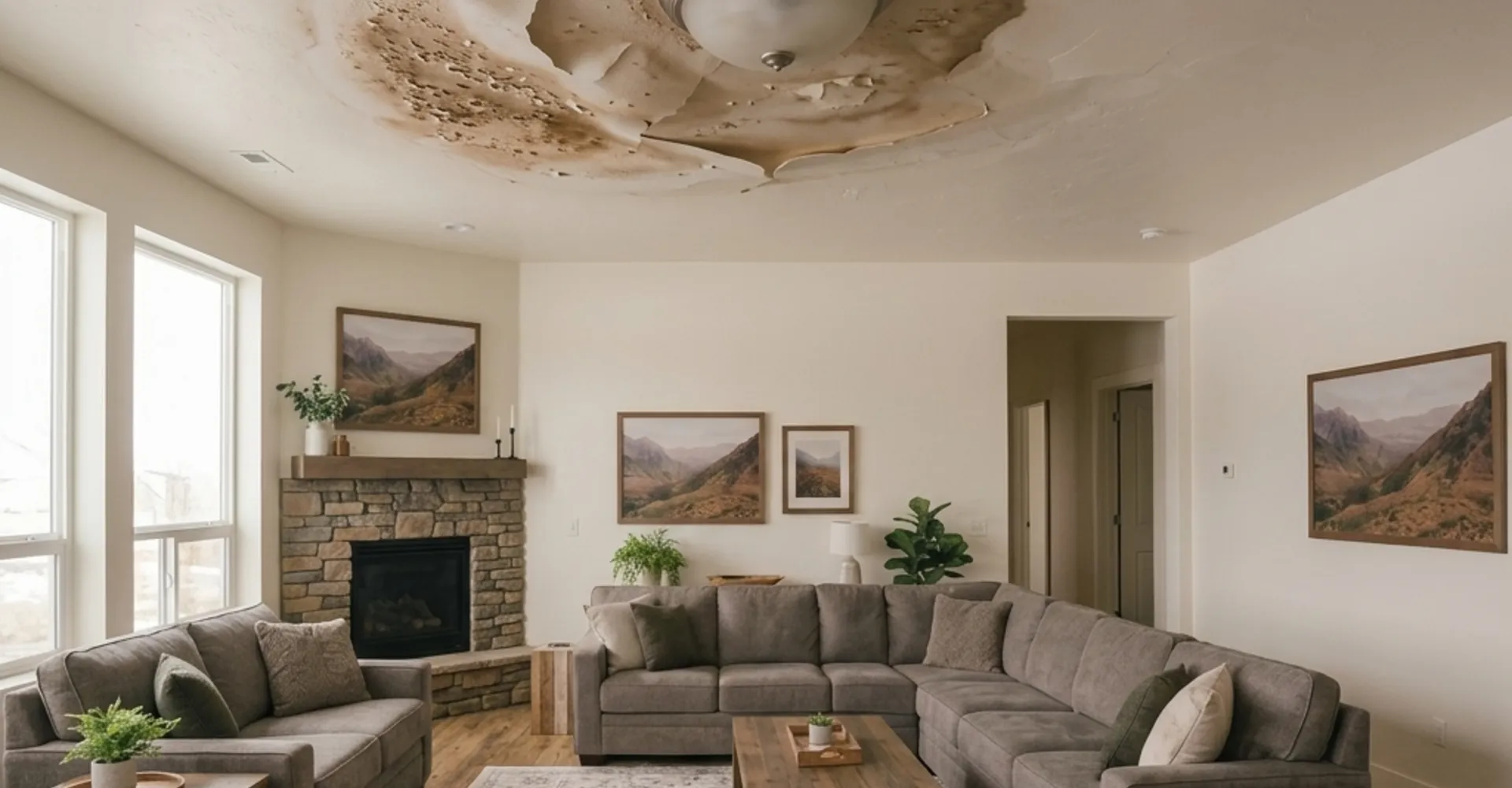
01Water stains on a ceiling or wall right below where a roof meets a wall
02Stains or peeling paint on the outside wall below a roof joint
03Soft, swollen or stained siding near the bottom of a roof line
04Leaks that show up during wind driven rain
05Flashing you can see from the ground that is bent, lifted or rusted
06Caulk at a roof joint that is cracked or pulling away
Missing pieces from the original install, especially kickout flashing
Caulk used instead of metal, which dries out and cracks in strong sun
Rust on older steel flashing
Bending and lifting from wind, ice or a past repair
Siding or stucco installed wrong over the flashing so water gets behind it
Movement of the house and roof through hot summers and cold winters
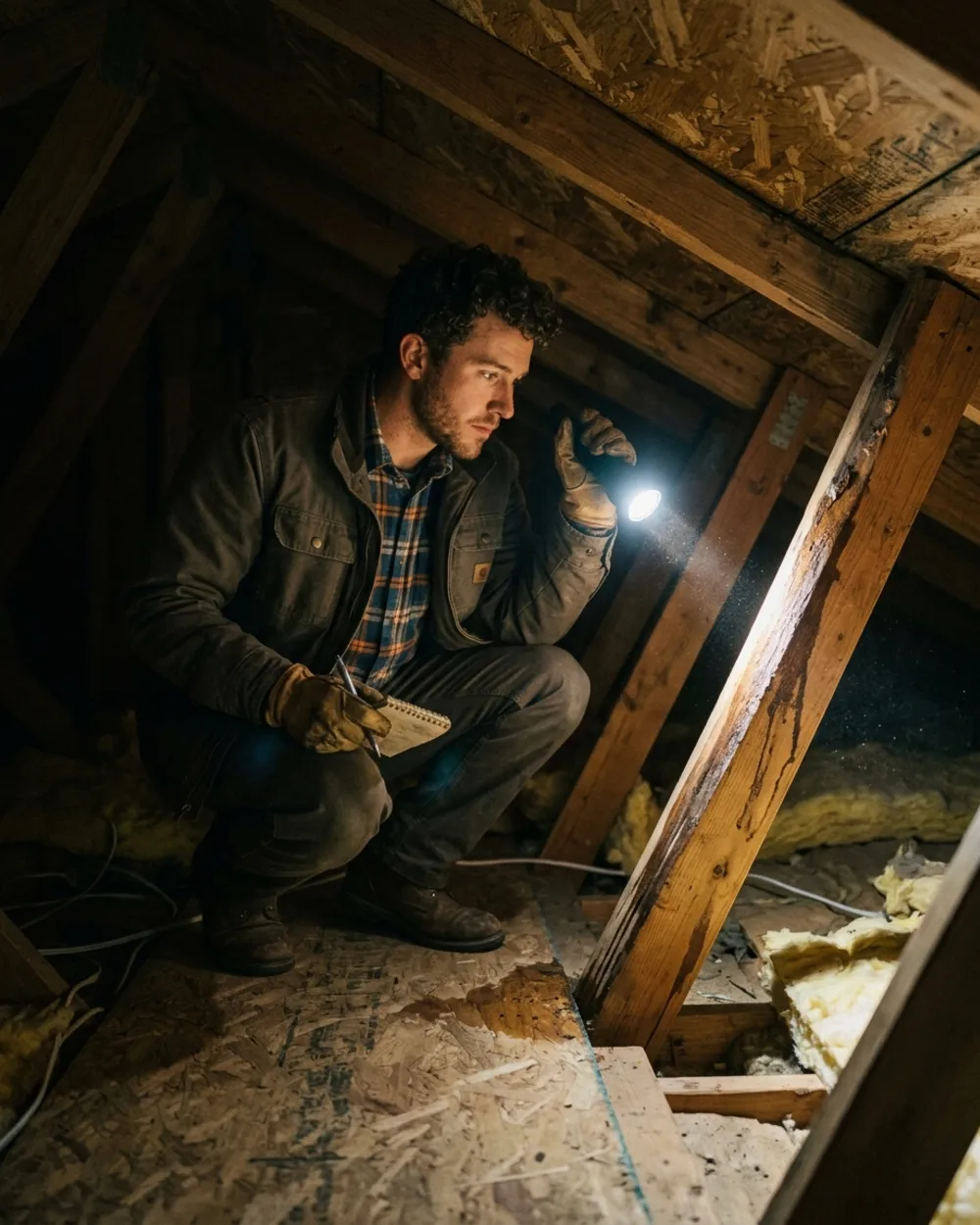
We check from the attic and the roof, and look at the siding below.
This lets us see the flashing and how it was layered.
We install new step, kickout, headwall or drip edge flashing, layered correctly with the shingles and the wall.
If water has been getting behind the siding, we look for soft wood and let you know what we find.
The area is closed up with matching shingles.
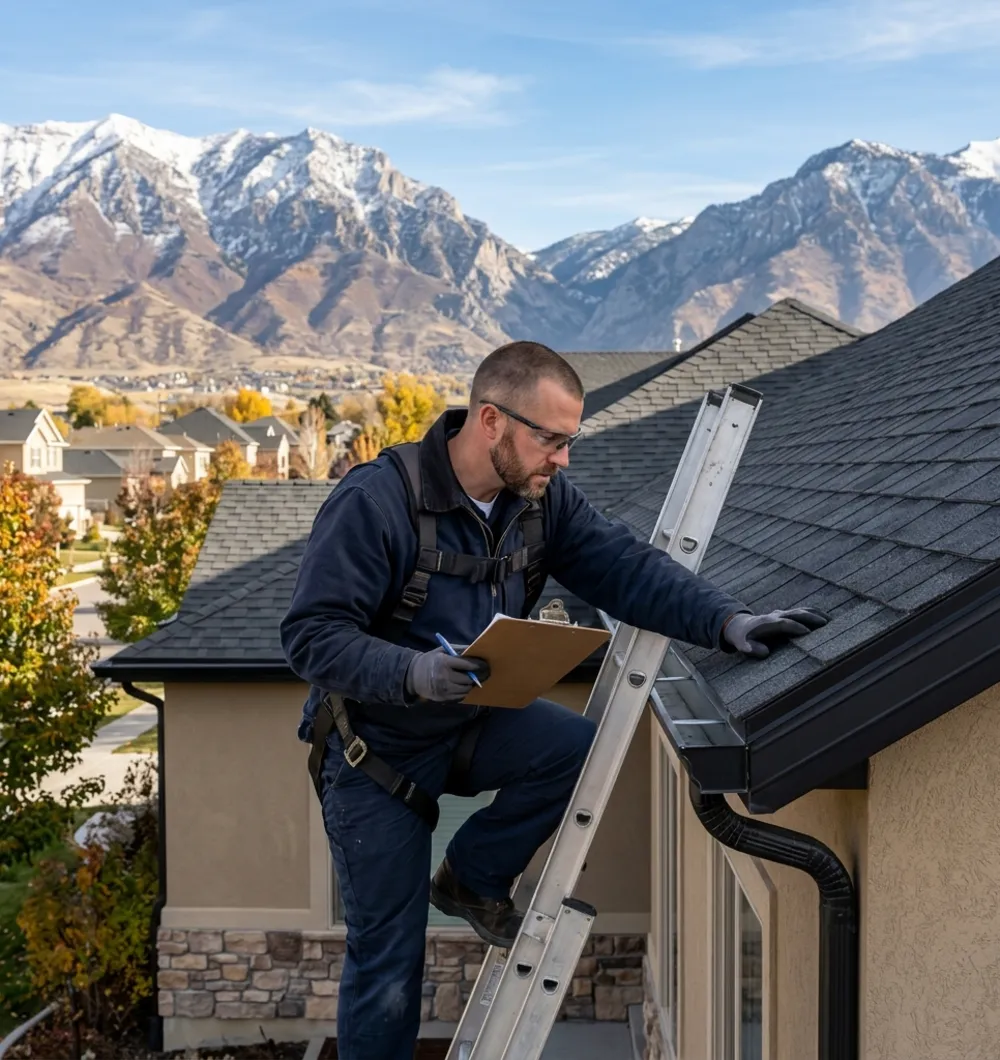
We check from the attic and the roof, and look at the siding below.
Still have a question? Call and ask. We will give you a straight answer.
(801) 426-8831 →Caulk can help as a short term fix, but it is not a real flashing repair. It breaks down in a few seasons, especially in Spanish Fork sun. Properly layered metal flashing is what keeps water out long term.
Water from the roof runs down the wall behind the gutter and soaks into the siding and the wall framing. Over time that causes rot and mold inside the wall, often without a visible ceiling stain.
Sometimes. Missing kickout flashing and poorly layered step flashing are among the most common install mistakes we see on newer homes.
A short section is usually a moderate repair. Costs rise if the wall behind it has been damaged. See our cost guide.
Our focus is the roof and flashing. If siding needs to be removed and replaced, we will tell you what is involved before work starts.
The fastest way to reach us is by phone. There are no forms to fill out and no waiting for a callback email. Just call and talk to someone about your roof.